
Is the thought of planning your next corporate event keeping you up at night? The sheer number of tasks, the fear of forgetting one crucial detail, the pressure of a tight budget-it’s enough to overwhelm even the most organised professional. Transforming a bold vision into a flawless reality is the hallmark of exceptional event planning, but the path from concept to execution is often filled with uncertainty, especially when it comes to complex technical requirements.
This is where confidence meets competence. Our definitive 10-step checklist is your strategic partner, designed to demystify the process and provide a class-leading framework for success. We will guide you through every critical stage, from establishing clear objectives and building a realistic budget in pounds, to mastering the technical production and AV solutions that create an immersive, unforgettable experience. Consider this your roadmap to flawless execution, ensuring no detail is overlooked and every goal is achieved.
The Foundation: Defining Your Event’s ‘Why’ and ‘Who’ (Steps 1-2)
Every unforgettable event begins not with a venue or a guest list, but with a strategic foundation. Before a single decision is made, a successful outcome must be clearly envisioned. This initial phase of professional event planning is critical; it transforms a vague idea into a targeted, results-driven project. The entire discipline of Event management is built upon this strategic foundation, focusing first on the fundamental questions: Why are we holding this event, and who is it for?
Step 1: Set SMART Objectives and KPIs
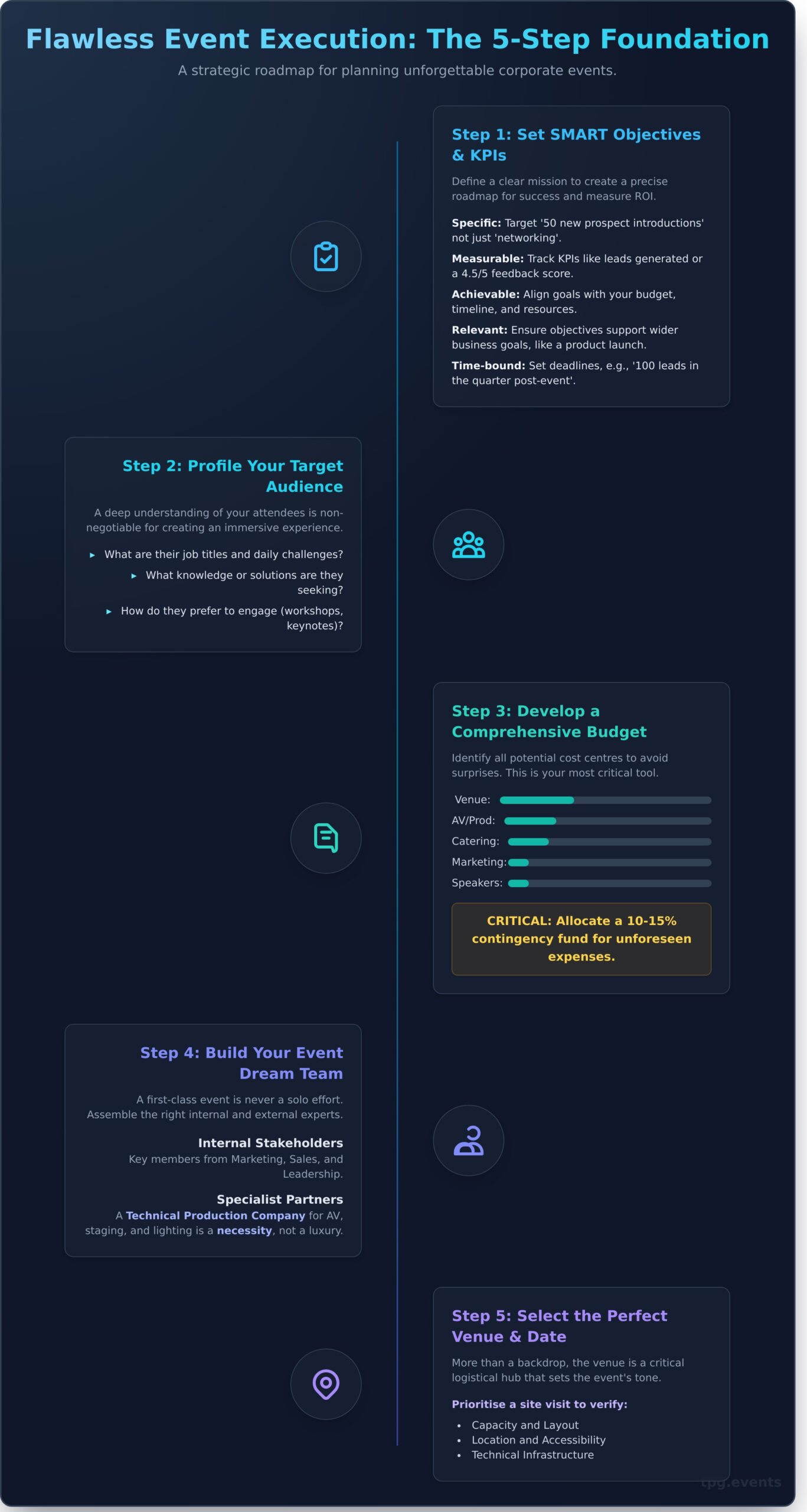
To deliver a class-leading event, you must move beyond ambiguous goals like ‘brand awareness’ and establish a clear mission. By setting SMART objectives, you create a precise roadmap for success and a framework for measuring your return on investment. This foundational step ensures every subsequent decision supports your core business aims.
- Specific: Define exactly what you want to achieve. Instead of ‘networking’, aim to ‘facilitate 50 introductions between our sales team and new prospects’.
- Measurable: Establish Key Performance Indicators (KPIs) to track progress. This could be the number of qualified leads generated, a target delegate feedback score of 4.5/5, or a 20% increase in social media engagement.
- Achievable: Align your goals with your available budget, timeline, and resources. A realistic plan inspires confidence and prevents costly overreach.
- Relevant: Ensure your event’s objectives directly contribute to wider business goals, such as launching a new product or expanding into a new market.
- Time-bound: Set clear deadlines for achieving your objectives, such as ‘generate 100 qualified leads within the quarter following the event’.
Step 2: Profile Your Target Audience
An event is ultimately an experience designed for its attendees. A deep, nuanced understanding of your audience is non-negotiable for creating an immersive and valuable occasion. Go beyond simple demographics to build a detailed picture of the people you want to attract, considering their professional lives, challenges, and motivations.
Ask critical questions to shape an experience that truly resonates:
- What are their job titles and what challenges do they face daily?
- What knowledge, solutions, or connections are they actively seeking?
- What will make attending your event an unmissable and valuable use of their time?
- How do they prefer to engage? Are they looking for interactive workshops, high-profile keynote speakers, or informal networking opportunities?
Building the Blueprint: Budgeting and Assembling Your Team (Steps 3-4)
With your goals defined, the next phase of your event planning journey involves creating the operational framework. This is where your vision meets reality through meticulous financial planning and strategic team assembly. These two pillars-budget and people-will determine your event’s scale, quality, and ultimate success, transforming an idea into an unforgettable experience.
Step 3: Develop a Comprehensive Event Budget
Your budget is the most critical tool in your arsenal, dictating every decision from venue choice to production quality. To avoid costly surprises, begin by identifying all potential cost centres. As outlined in many resources, including this comprehensive a successful event planning guide, a detailed financial plan is non-negotiable. Start by mapping out major expenses:
- Venue Hire: Often the largest single cost for any event.
- Production & AV: Includes staging, lighting, sound, and video solutions.
- Catering: Per-head costs for food, beverage, and staffing.
- Marketing & Promotion: Digital ads, print materials, and PR campaigns.
- Speakers & Talent: Fees and travel, which can range from a few hundred to over £15,000 for a keynote in the UK.
When budgeting for high-profile speakers or executives, travel is a significant component. For creating a truly first-class experience and ensuring key personnel arrive refreshed and on schedule, many top-tier corporate events factor in the cost of private aviation. Specialists in this area, such as FlyEliteJets, provide the kind of seamless travel solutions that align with a premium event’s objectives.
Research realistic costs for each category and track everything in a spreadsheet to monitor projected versus actual spend. Critically, always allocate a 10-15% contingency fund for unforeseen expenses. This buffer is the key to maintaining control when the unexpected occurs.
Step 4: Build Your Event Dream Team
A first-class event is never a solo effort. Assembling the right team with clearly defined roles is essential. Start by identifying key internal stakeholders from departments like marketing, sales, and leadership. From there, determine which elements you can manage in-house versus those requiring specialist partners.
It’s crucial to distinguish between an event planner, who manages overall logistics, and a technical production company, which delivers the creative and technical vision. For truly immersive experiences, bringing in experts for AV, staging, and lighting is not a luxury-it’s a necessity. A class-leading production partner does more than supply equipment; they act as a seamless extension of your team, providing the creative solutions and technical expertise to bring your concept to life.
Crafting the Experience: Venue, Theme, and Content (Steps 5-6)
With your objectives defined and budget set, the next phase of event planning focuses on building the tangible framework for an unforgettable experience. The decisions you make here-from the physical space to the intellectual substance-will directly shape your guests’ journey. This is where your vision begins to take concrete form, transforming abstract goals into a compelling, immersive reality.
Step 5: Select the Perfect Venue and Date
Your choice of venue is more than a backdrop; it is a critical logistical hub that sets the tone for your entire event. A first-class location elevates the guest experience and ensures seamless execution. When securing your space and date, prioritise a site visit to verify that the reality matches the brochure. TPG Events always recommends a thorough assessment of the following:
- Capacity and Layout: Does the space comfortably accommodate your expected guest count and planned activities, from keynote stages to breakout rooms?
- Location and Accessibility: Consider transport links, parking, and compliance with UK accessibility standards for all attendees.
- Technical Infrastructure: Confirm the availability and quality of Wi-Fi, power, and in-house AV services. Can it support your technical production needs?
- Date Availability: Check your proposed date against major UK bank holidays, industry conferences, or significant local events to maximise attendance.
Step 6: Design the Event Programme and Content
The programme is the heart of your event, delivering the value your audience came for. A powerful, cohesive theme is the golden thread that ties every element together, from stage design and digital branding to the tone of your speakers. This strategic alignment is central to effective event planning and creating a memorable narrative.
Develop a detailed agenda that balances different formats to maintain energy and engagement. Consider a dynamic mix of keynote presentations, interactive workshops, panel discussions, and dedicated networking breaks. When booking speakers or entertainment, look beyond expertise alone; seek out dynamic presenters who can captivate an audience and reinforce your core message. Incorporating interactive elements like live polling, Q&A sessions, or gamification provides an innovative solution to keep attendees invested from start to finish.
The Technical Production Plan: Staging, AV, and Lighting (Step 7)
While the venue sets the scene, your technical production is what brings your event to life. This is where a physical space is transformed into an immersive environment and your message is delivered with impact. A common misstep in event planning is treating audio, visual, and lighting as an afterthought. For a flawless execution, these elements demand early attention and a detailed technical brief.
Truly exceptional events are built on a foundation of technical excellence. Partnering with creative production experts ensures every sight and sound is perfectly calibrated to create an unforgettable experience for your audience. This isn’t just about hiring equipment; it’s about investing in a seamless, professional, and high-impact solution.
Audio Visual (AV) Requirements
Your AV setup is the primary vehicle for your content. A comprehensive plan is essential, whether you’re running a small conference or a large-scale hybrid event. Consider every technical touchpoint to ensure your message is seen and heard with crystal clarity.
- Core Audio & Visual: Define your needs for microphones (lapel, handheld, lectern), PA systems, projectors, and screens or high-impact LED walls.
- Hybrid & Virtual Integration: Plan for live streaming or recording capabilities if you need to reach a remote audience, ensuring a consistent experience for all attendees.
- On-Site Support: Always secure dedicated technical support to manage the equipment on the day and troubleshoot any issues instantly.
Staging, Set Design, and Lighting
The stage is the focal point of your event, and its design should be a powerful extension of your brand and theme. Strategic lighting does more than just illuminate; it creates mood, directs focus, and transforms the atmosphere of the entire room. This is a key part of the event planning process where you can truly get creative with branding.
Incorporate custom-branded elements like bespoke lecterns, dynamic backdrops, or projected logos (gobos) to reinforce your identity. A well-designed stage and lighting scheme ensures your speakers and your brand look class-leading from every angle. See how our technical production can elevate your event.
Spreading the Word: Promotion and Attendee Management (Step 8)
A meticulously planned event deserves an engaged audience. This is the stage where your strategic vision meets the market, transforming potential interest into confirmed attendance. Effective promotion isn’t just about selling tickets; it’s about building anticipation and communicating the unique value of your event to the right people. A cornerstone of successful event planning is a robust promotional strategy that ensures a full house.
Develop Your Event Marketing Strategy
Your promotional plan should be a multi-channel campaign designed to build momentum over time. The foundation of this is your event website or landing page-a central, professional hub for all information and registration. From there, deploy a coordinated strategy that leverages the most effective channels to reach your target audience in the UK and beyond.
- Email Marketing: Engage your existing database with targeted announcements, compelling content, and exclusive early-bird offers to drive initial registrations.
- Social Media: Utilise platforms like LinkedIn or Instagram to create shareable content, run targeted ad campaigns, and build an online community around your event.
- Media & Industry Partnerships: Collaborate with relevant publications or organisations to amplify your reach, enhance credibility, and tap into new audiences.
Your messaging should be benefit-driven, clearly articulating why your event is an unmissable, unforgettable experience.
Manage Registration and Communications
A seamless registration process is non-negotiable. Choose a user-friendly ticketing platform that provides a smooth, secure experience for attendees while capturing the essential data you need for logistics and post-event analysis. Your event website should be the single source of truth, funneling all interest to this clear call to action.
Once an attendee has registered, your communication must be flawless. Implement an automated system to send immediate confirmation emails, providing peace of mind. As the event approaches, schedule a series of pre-event communications with valuable information, such as the final agenda, speaker profiles, venue directions, and networking tips. This consistent contact keeps your audience engaged and ensures they arrive prepared and excited for a first-class experience.
Executing this stage perfectly is key to maximising attendance and delivering value. For class-leading solutions that integrate promotion and attendee management into your event, see how TPG Events delivers results.
The Final Mile: Execution and Post-Event Analysis (Steps 9-10)
The culmination of months of meticulous planning arrives in these final, critical steps. This is where a detailed strategy transforms into an unforgettable live experience. The final weeks are dedicated to confirming every detail for flawless on-site execution, while the post-event phase is essential for measuring success and proving the value of your investment. This is where professional expertise makes all the difference.
Step 9: Final Preparations and On-Site Management
Success on the day is dictated by the diligence of the preceding weeks. Your ‘run-of-show’ document becomes the single source of truth-a minute-by-minute script for all staff, speakers, and technical partners. It ensures everyone understands their role and timing, creating a seamless flow for your guests. To guarantee this, we orchestrate:
- A final, comprehensive walkthrough with the venue and key production partners to confirm layouts, AV setups, and logistics.
- Distribution of the detailed run-of-show to all stakeholders, leaving no room for ambiguity.
- Robust contingency plans for common challenges, from tech glitches to the unpredictable British weather, ensuring a first-class experience no matter what.
Step 10: Gather Feedback and Measure ROI
An exceptional event’s impact lasts long after the final guest departs. The crucial final step in any comprehensive event planning process is to analyse its performance and demonstrate its value. This isn’t just about finishing the project; it’s about building a case for future investment and continuous improvement.
Your post-event process should include sending timely surveys to capture attendee feedback, analysing engagement data against the KPIs you established in Step 1, and holding a thorough debrief with your team. This culminates in a comprehensive final report for stakeholders, translating raw data into a clear narrative of success and delivering demonstrable ROI.
By mastering these final stages, you not only deliver a memorable event but also create a powerful asset for your organisation. For a partnership that ensures class-leading execution and analysis, explore the solutions delivered by TPG Events.
Bringing Your Event Vision to Life
Following this 10-step checklist demonstrates that successful corporate event planning hinges on two core principles: a clear, strategic foundation and flawless technical execution. While defining your purpose and building the right team sets the stage for success, it is the seamless integration of creative content and professional production-from AV and staging to lighting-that truly captivates your audience and creates an unforgettable experience.
Your checklist provides the essential blueprint, but transforming that plan into a spectacular reality requires specialist expertise. As a trusted technical production partner to the UK’s leading brands and venues, TPG Events brings decades of hands-on experience to every project. We deliver the class-leading AV, staging, and lighting solutions that elevate your event from a simple gathering to a powerful, immersive brand statement.
Ready to plan an unforgettable event? Let’s talk about the production.
With a solid strategy in hand and the right partner by your side, your next corporate event is perfectly positioned for success.
Frequently Asked Questions
How far in advance should I start planning a corporate event?
For a class-leading corporate event, the planning timeline is critical. A small-scale internal meeting or seminar can be organised within 1-3 months. However, for larger, more complex events like a multi-day conference or an elaborate gala, we recommend a lead time of at least 6-12 months. This extended period allows for securing premier venues, booking top-tier speakers, and executing a comprehensive marketing strategy, ensuring an unforgettable and flawlessly executed experience for every attendee.
What is the difference between an event planner and an event production company?
An event planner typically manages the logistical framework: budgeting, timelines, venue sourcing, and supplier coordination. They are the strategic architects of the event. In contrast, an event production company is the creative and technical engineer. We bring the vision to life through class-leading AV services, lighting design, staging, and immersive digital solutions. We are the extension of your team that handles the technical execution required to create a truly impactful and memorable experience.
What are the most common hidden costs in event planning?
In event planning, unforeseen expenses can impact your budget. Key hidden costs in the UK often include VAT, which can add 20% to many supplier invoices. Others to watch for are staff overtime, licensing fees for music (PPL PRS), public liability insurance, and last-minute AV equipment hires. A robust budget should always include a contingency fund of 10-15%-typically a few thousand pounds (£) for larger events-to cover these unexpected but necessary expenditures.
How do I create an effective event contingency plan?
A first-class contingency plan begins with a thorough risk assessment. Identify potential issues such as technical failures, a keynote speaker cancellation, or adverse weather for an outdoor event. For each risk, create a clear, actionable solution: a backup power generator, a list of on-call replacement speakers, or a pre-arranged indoor alternative. Ensure your entire team is briefed on these protocols so they can respond swiftly and professionally, maintaining a seamless experience for your guests.
What’s the best way to measure the ROI of a corporate event?
Measuring event ROI starts with defining clear objectives before you even begin. Are you aiming for lead generation, increased brand awareness, or improved employee engagement? Track specific Key Performance Indicators (KPIs) tied to these goals, such as the number of qualified leads captured, social media engagement rates, or post-event survey feedback. A direct financial calculation involves comparing the value of new business or sales generated against the total event cost to determine a tangible return.
How can I make my corporate event more engaging for attendees?
To create an unforgettable attendee experience, focus on interaction and immersion. Move beyond passive presentations by incorporating live polling, mobile Q&A sessions, and structured networking opportunities. We provide innovative solutions like interactive touchscreens, gamification elements, and immersive LED backdrops to captivate your audience. These creative and technical elements transform a standard corporate gathering into a dynamic and memorable event that encourages active participation and leaves a lasting impression.