
Are you passionate about the buzz of a live event but struggling to translate that energy into a standout CV? Navigating the path to securing one of the industry’s top av technician jobs can feel overwhelming, with vague skill requirements and unclear career ladders leaving you unsure of the next step. The world of live production is fast-paced and technically demanding, but for those equipped with the right expertise, it offers a career that is both creatively fulfilling and exceptionally rewarding.
Consider this your definitive 2026 career guide. We are here to provide the class-leading solutions you need to succeed. Inside, we will demystify the specific technical skills that leading UK event companies are actively seeking, lay out a clear roadmap for advancing from a junior to a senior role, and deliver actionable insider tips to make your application truly unforgettable. Get ready to build the confidence and strategic insight required to secure a first-class position and forge a stable, challenging, and innovative career.
What Does an AV Technician *Actually* Do? A Look Behind the Curtain
Forget the dry, one-line job description. An AV Technician is the technical backbone of any live event, conference, or exhibition. They are the calm, confident professionals ensuring every presentation is seen, every speech is heard, and every moment creates an unforgettable impact. It is a dynamic career that blends deep technical expertise with on-the-fly problem-solving and a creative touch. The role is built on a foundational understanding of What is Audiovisual (AV)?-the seamless integration of sound and visual media to create immersive experiences. Success in av technician jobs hinges on mastering the three key phases of any event: pre-production, the live show, and post-production.
The Core Responsibilities: From Warehouse to Wrap
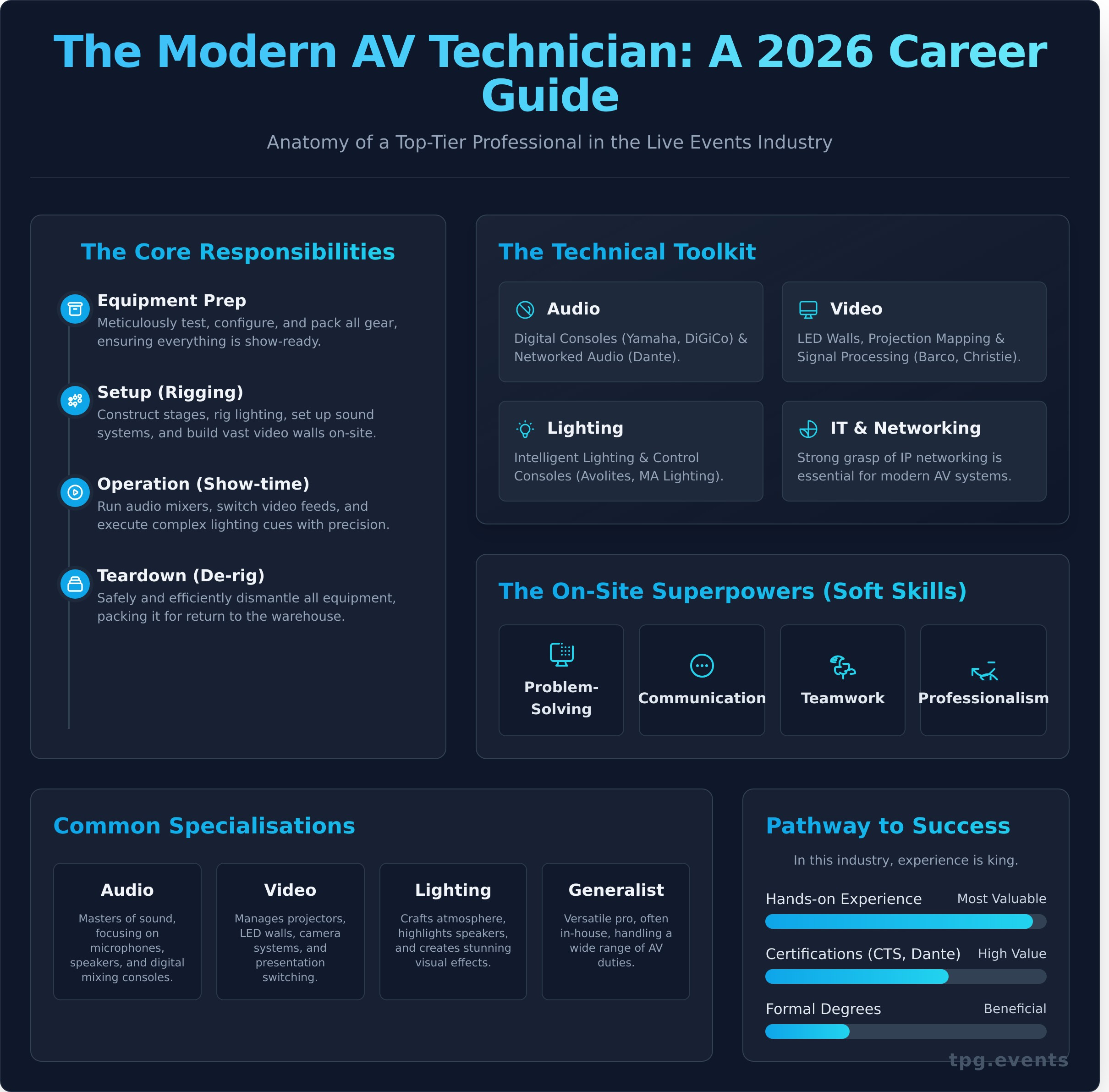
An AV Technician’s work cycle is meticulously planned, ensuring a flawless execution from start to finish. This process typically involves four critical stages:
- Equipment Prep: Before any event, technicians meticulously test, configure, and pack all necessary gear-from microphones to LED panels-ensuring everything is show-ready.
- Setup (Rigging): On-site, the team builds the technical infrastructure. This includes constructing stages, rigging lighting trusses, setting up sound systems, and building vast video walls.
- Operation (Show-time): During the live event, technicians are at the controls, running audio mixers, switching video feeds, and executing complex lighting cues with precision.
- Teardown (De-rig): Once the audience leaves, the process reverses. The crew safely and efficiently dismantles all equipment, packing it for return to the warehouse.
Common Specialisations in the AV World
While some technicians are generalists, many choose to specialise, becoming class-leading experts in a specific discipline. Key specialisations include:
- Audio Technician: The master of sound, focused on microphones, speakers, digital mixing consoles, and ensuring crystal-clear audio for every attendee.
- Video Technician: Responsible for all visual elements, managing projectors, LED walls, camera systems, and presentation switching solutions.
- Lighting Technician: A creative and technical role, using lighting to craft atmosphere, highlight speakers, and create stunning visual effects.
- Generalist AV Tech: A versatile professional, often found in-house at venues or corporate settings, capable of handling a wide range of AV duties.
A Day in the Life on a Corporate Conference
To make it real, imagine a typical day at a large corporate event. The morning begins with a crew briefing, followed by final systems checks and technical rehearsals with presenters. During the afternoon, the technician is live, managing presentation slides, operating cameras, and ensuring seamless audio for keynote speakers and Q&A sessions. The evening is dedicated to a swift and safe de-rig, preparing the equipment and venue for the next day’s programme. This demanding yet rewarding cycle is the heartbeat of the live events industry and the core of what makes av technician jobs so vital.
Essential Skills & Qualifications to Get Hired
Landing the best av technician jobs requires far more than just knowing how to plug in a cable. In the world of high-stakes live events, success is built on a robust blend of class-leading technical knowledge and impeccable soft skills. Employers seek proven ability and a calm, professional demeanour-the kind of ‘show-must-go-on’ attitude that turns potential crises into seamless successes. As technology evolves at a breakneck pace, a commitment to continuous learning is not just an advantage; it’s a necessity.
The Technical Toolkit: What Gear You Need to Know
Technical fluency is the foundation of your career. While every event is different, a top-tier technician is expected to have hands-on experience with industry-standard equipment. Your CV should demonstrate proficiency across:
- Audio: Deep familiarity with digital mixing consoles (e.g., Yamaha, DiGiCo, Allen & Heath) and networked audio protocols like Dante.
- Video: Expertise in projection mapping, LED wall configuration, and signal processing systems from brands like Barco, Christie, and Analog Way.
- Lighting: Competence with intelligent lighting and control consoles, such as those from Avolites, MA Lighting, and ChamSys.
- IT & Networking: A strong grasp of IP networking is now essential, as most modern AV systems are network-based.
Soft Skills That Make You a Top-Tier Candidate
The gear is only half the story. Your ability to collaborate and communicate under pressure is what makes you an invaluable part of the team. Standout candidates excel in:
- Problem-Solving: The ability to troubleshoot calmly and effectively when the pressure is on.
- Communication: Liaising clearly with clients, presenters, and project managers to ensure everyone is aligned.
- Teamwork: Working as a cohesive unit within a larger production crew to deliver a flawless event.
- Client-Facing Professionalism: Acting as a confident and reassuring representative of the company on-site.
Qualifications: Degrees vs. Certifications vs. Experience
While a formal degree in live sound or event production can be beneficial, it’s not the only route to success. In this industry, experience is king. A strong portfolio showcasing your work on past events is your most powerful asset. Industry certifications, such as the Certified Technology Specialist (CTS) credential or manufacturer-specific training (e.g., Dante Certification), add significant value and demonstrate a commitment to your craft. While specific UK market data varies, the general career outlook for AV technicians globally shows a consistent demand for professionals with a proven, well-rounded skillset.
Your Career Path: From Junior Technician to Technical Director
Securing one of the many available av technician jobs is more than just landing a position; it’s the entry point to a class-leading career in a dynamic and innovative industry. For ambitious individuals with a passion for technology and live events, the path for progression is clear and rewarding. Leading companies in the UK invest heavily in training and development, creating opportunities to specialise, manage teams, or transition into high-level project management and strategic roles.
The Typical Progression Ladder
Your journey often begins with a foundational role, building a deep understanding of the equipment and processes that deliver unforgettable events. A typical career ladder includes:
- Warehouse Technician / Trainee: This is where it all starts. You’ll learn the inventory inside and out, from prepping and testing equipment to understanding signal flow and maintenance. It’s an essential foundation for all future roles.
- Junior AV Technician: Moving out of the warehouse and onto event sites, you’ll work alongside senior technicians, assisting with setup, operation, and derigging. This is where you gain invaluable hands-on experience.
- AV Technician: With proven competence, you’ll take ownership of a specific area of a production, such as audio, video projection, or lighting. You will be trusted to manage your station independently.
- Senior / Lead Technician: As a seasoned professional, you will oversee entire technical crews and manage the most complex on-site setups, ensuring every element is executed flawlessly and to a first-class standard.
Moving into Management and Strategy
The technical skills gained on the event floor open doors to strategic leadership positions. While the core duties detailed in resources like the Bureau of Labor Statistics Occupational Outlook Handbook focus on hands-on operation, many technicians evolve into roles that shape the entire event. These include becoming a Project Manager, where you shift from operating the gear to managing budgets, client relationships, and overall project delivery, or a Department Head, leading a company’s entire audio, video, or lighting division. The pinnacle for many is the role of Technical Director, the ultimate authority responsible for designing the complex, integrated AV systems for large-scale conferences and productions.
High-Demand Specialisms for the Future
To stay ahead in the industry, specialising in high-growth areas is a powerful career move. By 2026, technicians with expertise in the following fields will be in exceptionally high demand:
- AV/IT Network Engineer: As AV systems become increasingly reliant on IP networks, expertise in networked audio (Dante), video-over-IP, and system security is crucial.
- Virtual & Hybrid Event Specialist: The future of events is hybrid. Professionals who can manage complex streaming workflows, broadcast-quality production, and interactive online platforms are indispensable.
- Interactive Technology Expert: Companies are constantly seeking innovative ways to create immersive experiences. Skills in augmented reality (AR), virtual reality (VR), projection mapping, and interactive installations will define the next generation of live events.
How to Land Your First or Next AV Technician Job
Securing a class-leading role in the live events industry requires more than just technical skill; it demands a strategic, professional approach. Your ability to showcase practical experience and communicate your value effectively is what separates a good candidate from a great one. A thoughtful job search strategy will ensure you find opportunities that match your ambition and expertise, helping you build a truly rewarding career.
Crafting a CV That Gets Noticed
Your CV is your primary marketing document. It must immediately convey your technical competence and real-world experience. To make an impact, structure it to highlight the most critical information first. A generic CV is easily overlooked; a tailored, results-driven one demands attention.
- Lead with a Professional Summary: Begin with a concise summary of your key skills and specialisms, such as live sound engineering, video wall operation, or lighting design.
- Detail Specific Events: Instead of generic duties, use bullet points to describe your responsibilities on named projects. For example, “Managed all video playback using Resolume Arena for the 2025 Tech Innovators Summit.”
- List Your Technical Proficiencies: Create a dedicated section listing the specific hardware (e.g., DiGiCo consoles, Barco projectors) and software (e.g., QLab, Vectorworks) you are proficient with.
- Link to Your Portfolio: If you have high-quality photos or videos of your work, include a link to a professional portfolio website or a curated social media profile.
Where to Find the Best Opportunities
The best av technician jobs are often found through industry-specific channels. Casting a wide net is good, but focusing your search on platforms where leading event companies operate will yield higher-quality results.
- Industry Job Boards: Look beyond generic sites. Platforms like ProductionBase and the TPI Magazine jobs section are tailored specifically for the UK live events and production industry.
- Direct Company Websites: Top-tier production companies, like TPG, frequently post vacancies directly on their own careers pages before advertising elsewhere.
- Professional Networking: The events world thrives on connections. Attend industry trade shows like PLASA, connect with hiring managers on LinkedIn, and nurture your professional network.
- Specialist Recruiters: Engage with recruitment agencies that specialise in the AV and events sector. They have established relationships with leading employers.
Acing the Interview and Technical Test
The interview is your chance to prove you have the technical knowledge and professional mindset to deliver unforgettable experiences. Preparation is key. Many companies will also include a practical assessment to verify your hands-on skills.
Be ready to discuss past projects in detail, focusing on challenges you overcame and the solutions you implemented. Research the company’s recent work and express a genuine interest in the types of events they produce. Finally, prepare thoughtful questions about their team structure, equipment inventory, and creative process. This demonstrates that you are not just looking for a job, but a genuine partnership.
Why Build Your Career at a Full-Service Production Company?
Once you have the skills and qualifications, the single most important decision you’ll make is choosing where to build your career. While in-house roles at a single venue offer stability, the pathway to true technical mastery and leadership is often found within a full-service production company. The best companies offer an unparalleled combination of project variety, investment in technology, and a culture that fosters growth, making them the premier destination for ambitious professionals exploring av technician jobs.
Choosing the right employer means looking for an organisation that invests as much in its people as it does in its equipment. It’s about finding a culture that values collaboration, creativity, and technical excellence in equal measure.
Exposure to High-Profile, Diverse Projects
Forget the repetition of a single venue. At a production company, one week you could be delivering a major corporate conference, the next an immersive brand launch or a high-profile awards ceremony. This constant variety not only keeps the work exciting but exposes you to a far wider range of class-leading equipment and creative challenges, rapidly accelerating your technical expertise and building an impressive portfolio.
A Culture of Teamwork and Excellence
Excellence in live events is never a solo effort. You’ll work as part of a highly skilled crew, learning directly from seasoned project managers, creative directors, and senior technicians. In this collaborative environment, every team member is focused on a shared goal: delivering flawless, unforgettable experiences. It’s a culture where quality is paramount and client satisfaction drives every decision, allowing you to contribute to projects you can be truly proud of.
Commitment to Training and Development
The AV landscape evolves constantly, and a top-tier employer ensures its team stays ahead of the curve. Look for a company that actively invests in your professional development through official manufacturer training and certifications. A clear pathway for internal promotion-from technician to crew chief to project manager-is the hallmark of a company dedicated to building long-term careers, not just filling short-term roles. See how we build careers and explore opportunities with TPG Events.
Your Next Stage: Building a Career in AV Production
The path to a successful career in audio-visual technology is clearer than ever. As we’ve explored, the role of an AV technician is a dynamic blend of technical skill and creative problem-solving, essential for bringing unforgettable events to life. With a defined career ladder and a growing demand for skilled professionals, the future for av technician jobs is exceptionally bright, especially within a full-service production company that can accelerate your growth and expose you to diverse, high-profile projects.
If you are ready to transform your passion into a profession, consider where your skills can make the most impact. TPG Events provides a unique opportunity to work on award-winning events for global brands, with constant access to the latest, state-of-the-art AV technology. We are committed to a culture of collaboration and technical excellence, where your career can truly thrive. Discover a career in class-leading event production with TPG Events. The stage is set for your success-it’s time to take your place.
Frequently Asked Questions
Do I need a university degree to become an AV technician?
No, a university degree is not a strict requirement for a career in AV. While a degree in sound engineering or media production can be advantageous, most employers prioritise hands-on experience and practical skills. Vocational qualifications, apprenticeships, and a strong portfolio demonstrating your technical abilities are often more valuable for securing your first role. A proactive attitude and a passion for technology are essential for success.
What are the typical working hours for an AV technician in live events?
Working hours in the live events sector are rarely a standard 9-to-5. Expect long and unsociable hours, including early morning starts for event setup (the ‘get-in’) and late-night finishes for breakdown (the ‘get-out’). Weekend and evening work is the industry standard, particularly for conferences, festivals, and corporate functions. A high degree of flexibility is essential, as your schedule is dictated entirely by the event’s requirements.
Is it better to be a freelance or full-time AV technician?
This depends on your personal and professional priorities. A full-time position with a production company or venue provides job security, a consistent salary, and benefits like paid holidays. Freelancing offers greater flexibility, the potential for higher day rates, and a wider variety of projects. However, it also demands strong self-discipline to manage your own schedule, finances, and business development to ensure a steady stream of work.
What is a realistic starting salary for a junior AV technician in the UK?
In the UK, a realistic starting salary for a junior or trainee AV technician typically falls between £22,000 and £26,000 per year. This figure can vary depending on your location, with positions in major cities like London often commanding a higher starting wage. As you gain class-leading experience and specialise in high-demand areas like video engineering or lighting design, your earning potential will increase substantially.
How physically demanding is an AV technician job?
The role of an AV technician is physically demanding and requires a good level of fitness. You will frequently be lifting and transporting heavy equipment, including speakers, screens, and flight cases. The job involves long periods of standing, walking, and often climbing ladders or working on rigging. Being prepared for the manual labour involved in event setup and breakdown is a crucial aspect of succeeding in many AV technician jobs.
What’s the biggest challenge of working in the live events industry?
The biggest challenge is managing the high-pressure, time-critical nature of live productions. There are no second takes; every cue must be executed flawlessly in real-time. This demands exceptional problem-solving skills under pressure and the ability to troubleshoot technical issues instantly. Balancing the long, irregular hours with the need to maintain peak performance and a meticulous eye for detail is the key to delivering unforgettable event experiences.