
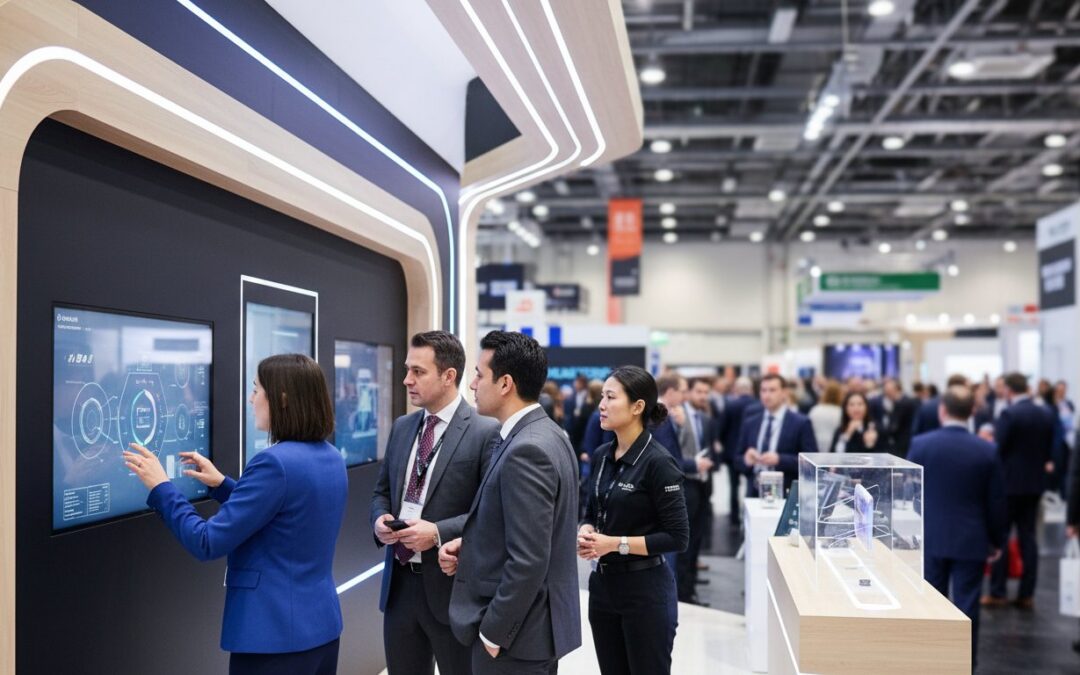
In a crowded UK exhibition hall, the pressure is immense. You’ve invested a significant budget, and the fear of your stand fading into the background-failing to attract visitors or generate leads-is a very real concern. How do you cut through the noise and ensure a tangible return on that investment? The entire challenge hinges on one critical process: designing an exhibition experience that is both strategic and unforgettable. A generic stand simply won’t deliver the results you need; you require a creative, immersive solution that actively engages your target audience from the moment they see it.
This is your definitive guide to achieving just that. We will move beyond simple aesthetics to provide a class-leading framework for creating a high-impact stand that delivers measurable business success. You will learn the essential strategies to develop a memorable brand presence, integrate technology effectively to create a buzz, and ultimately, convert passing interest into valuable leads and booked meetings. Let’s create an unforgettable experience that guarantees a positive return on your event investment.
Key Takeaways
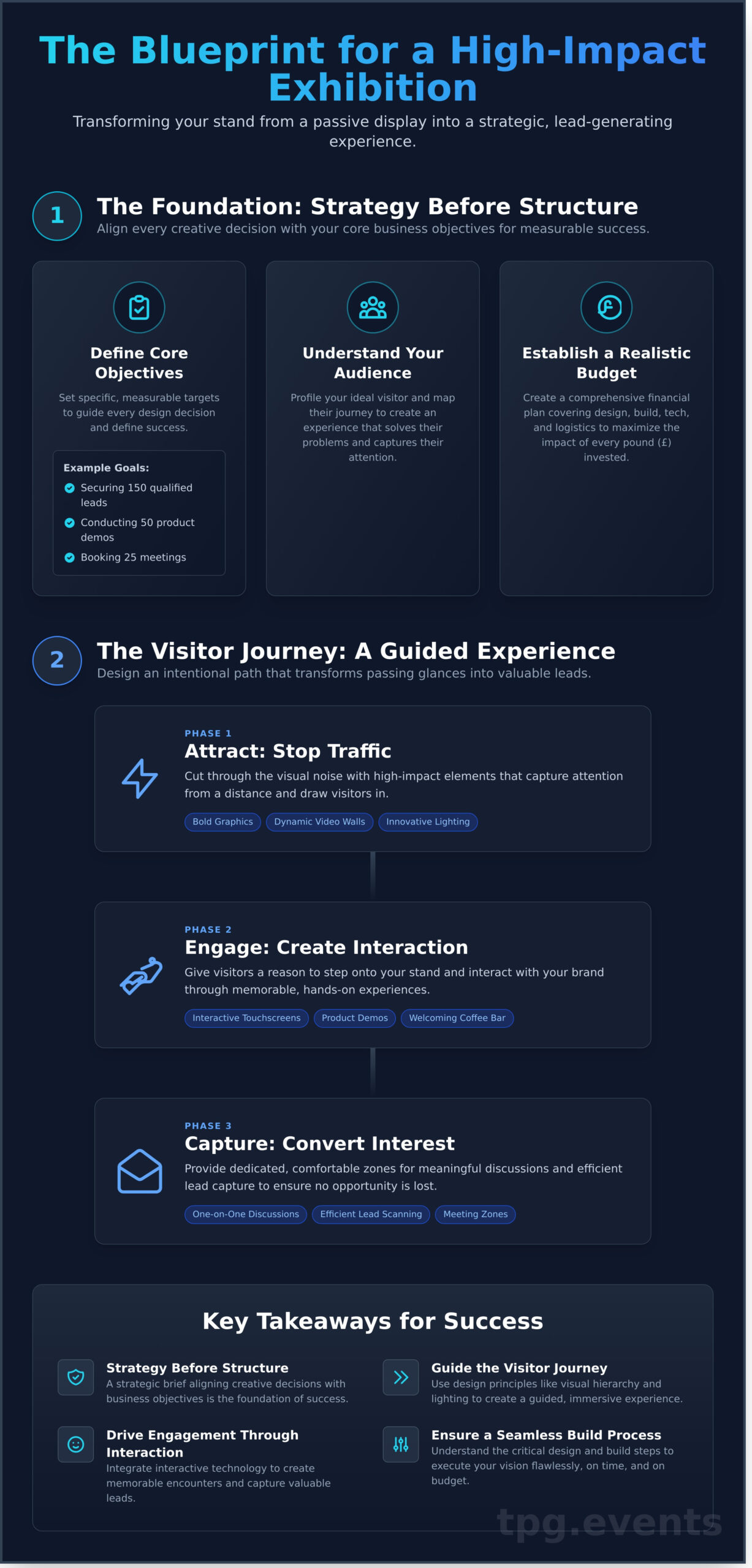
- Strategy Before Structure: The foundation of successfully designing an exhibition is a strategic brief that aligns every creative decision with your core business objectives.
- Guide the Visitor Journey: Utilise core design principles like visual hierarchy and intelligent lighting to transform your stand from a simple display into a guided, immersive experience.
- Drive Engagement Through Interaction: Learn why passive viewing is no longer enough and how to integrate interactive technology to create more memorable brand encounters and capture valuable leads.
- Ensure a Seamless Build Process: Understand the critical steps in the design and build process to ensure your creative vision is executed flawlessly, on time, and on budget.
The Foundation: Aligning Your Exhibition Design with Business Goals
Before a single sketch is made or a colour palette chosen, the most critical work in designing an exhibition stand begins. A visually stunning stand that fails to meet business objectives is merely an expensive piece of art. To deliver a tangible return on investment, your stand must be a hard-working marketing tool, engineered from the ground up to achieve specific, measurable goals. This strategic foundation moves beyond pure aesthetics to create a functional, results-driven environment designed to engage, persuade, and convert.
Step 1: Define Your Core Objectives
A successful design is born from a clear purpose. Begin by defining what a successful outcome looks like for your business. Is your primary goal to generate a high volume of sales leads, or is it to build brand awareness in a competitive market? Perhaps you are launching an innovative new product or focusing on nurturing relationships with key clients. Set specific targets to guide every design decision, such as:
- Securing 150 qualified leads
- Conducting 50 product demonstrations
- Booking 25 meetings with senior decision-makers
A stand designed for lead generation will require seamless data capture points and semi-private meeting spaces, while one focused on a product launch needs a central, dramatic showcase area.
Step 2: Understand Your Audience and Their Journey
To capture attention, you must first understand who you are trying to attract. Develop a clear profile of your ideal visitor: What are their job titles? What professional challenges do they face that you can solve? Map out their likely journey through the exhibition hall. An effective design anticipates their path, using compelling graphics, clear messaging, and strategic lighting to act as a beacon. The experience you create must answer their core questions instantly, turning a passing glance into a meaningful engagement that draws them onto your stand.
Step 3: Establish a Realistic Budget
Your budget is the framework that defines the scale of your creative ambition. A comprehensive financial plan for your exhibition presence must factor in all costs, including the design and build, AV technology, graphics, flooring, logistics, and installation. It is crucial to allocate funds strategically, prioritising high-impact elements that directly support your core objectives. Understanding the complete Exhibit design process is key to making informed financial decisions. Collaborating with a professional exhibition partner ensures you can maximise the impact of every pound (£) invested, delivering a class-leading solution that achieves your goals without unexpected expenses.
Core Principles of High-Impact Exhibition Stand Design
A truly effective exhibition stand is more than just a branded space; it’s a carefully orchestrated experience. The ultimate goal when designing an exhibition stand is to guide a visitor on a seamless journey-from a casual glance in the aisle to a meaningful conversation with your team. This requires a strategic blend of visual appeal, clear messaging, and intelligent spatial planning. By focusing on these core principles, you can transform your stand from a passive display into an active engagement tool that delivers measurable results.
Creating a Clear Visitor Journey
A successful stand functions like a well-designed sales funnel, moving visitors through distinct phases. TPG Events creates solutions that address each stage:
- The ‘Attract’ Phase: Your first task is to stop traffic. Use bold, large-scale graphics, dynamic video walls, and innovative lighting to cut through the visual noise of the exhibition hall and capture attention from a distance.
- The ‘Engage’ Phase: Once you have their attention, draw them in. Interactive touchscreens, hands-on product demonstrations, or a welcoming coffee bar provide a reason to step onto your stand and interact with your brand.
- The ‘Capture’ Phase: Don’t let valuable leads walk away. Create dedicated, comfortable zones for one-on-one discussions and efficient lead scanning, ensuring your team can easily capture contact details and qualify prospects.
Mastering Visual Hierarchy and Messaging
You have three seconds to communicate who you are and what you do. A powerful visual hierarchy ensures your key message lands instantly. These high-impact design principles are critical for ensuring your investment pays off. Place your logo and a concise, benefit-led headline high up on the stand for maximum visibility across the hall. Avoid cluttering your space with text; instead, use powerful, high-resolution imagery and graphics to tell your story. Crucially, ensure all branding-from colours and fonts to tone of voice-is perfectly consistent with your other marketing channels to build brand recognition and trust.
Strategic Spatial Planning and Flow
The physical layout of your stand can either invite people in or push them away. When designing an exhibition space, prioritise an open, welcoming entrance free from barriers like desks or counters. Create clear, intuitive pathways that guide visitors through the stand to different zones, preventing bottlenecks and encouraging exploration. Incorporate semi-private, comfortable seating areas for more serious, in-depth discussions away from the main flow of traffic. Finally, always ensure your stand is fully accessible to all visitors, complying with all relevant UK regulations and creating an inclusive environment for everyone.
Bringing Your Stand to Life with Technical Production
A visionary concept is only the beginning. The crucial next step in designing an exhibition stand is translating that vision into a tangible, immersive environment. Class-leading technical production is the engine that powers this transformation, turning a simple space into an unforgettable brand experience that captivates and engages visitors from the moment they arrive.
Lighting Design to Create Mood and Focus
Strategic lighting does far more than simply illuminate your stand; it directs attention and builds atmosphere. A professional lighting design solution uses light to tell your story, creating a dynamic and inviting space that guides the visitor’s journey.
- Spotlights: Pinpoint key products or live demonstration areas, ensuring they become the undeniable centre of attention.
- Ambient LEDs: Bathe your stand in brand colours, reinforcing your identity and creating a cohesive, high-end feel.
- Zoned Lighting: Use varied intensity and colour temperatures to create distinct zones for demos, meetings, and hospitality.
- Dynamic Movement: Programmed lighting sequences can create subtle movement, drawing the eye from across the exhibition hall.
Audiovisual (AV) for Dynamic Engagement
In a busy hall, dynamic content is essential for cutting through the noise. High-quality AV solutions deliver your message with clarity and impact, providing interactive pathways for visitors to connect with your brand on their own terms.
- LED Video Walls: Display high-impact brand messaging, product videos, and live social feeds on a grand, unmissable scale.
- Interactive Touchscreens: Empower visitors with self-guided product tours, data capture forms, and gamified brand content.
- Directional Sound: Create focused audio zones using innovative sound-scaping technology, delivering targeted audio for demos without contributing to noise pollution.
Staging, Structure, and Materials
The physical structure of your stand is a powerful, non-verbal communicator of your brand’s values. The choice of materials, from sustainable timber to polished acrylic, immediately signals quality and permanence. A well-engineered structure not only looks impressive but also provides a safe and functional framework. Understanding the fundamental principles of exhibition design helps ensure your structure enhances visitor flow and engagement. Consider multi-level designs for private meeting areas or integrated rigging for impactful overhead signage and lighting rigs.
The complexities of designing an exhibition stand that integrates these technical elements demand specialist expertise. Partner with technical experts to create an unforgettable experience.
Interactive Elements: How to Engage Visitors for Longer
In today’s crowded exhibition hall, a passive display is an invisible one. To truly capture attention and create a lasting impact, you must transform visitors from spectators into active participants. The most effective approach when designing an exhibition stand is to build in interactive experiences that invite engagement. These encounters are not just memorable; they are powerful opportunities to communicate your brand message, showcase value, and efficiently capture qualified leads, turning visitors into advocates.
Product Demonstrations and Hands-On Experiences
Allowing potential clients to experience your product firsthand is one of the most powerful sales tools at your disposal. Move beyond static displays and create an immersive, hands-on environment that drives genuine interest.
- Dedicated ‘Demo Pods’: Create intimate spaces for one-on-one presentations, allowing your team to address specific client needs directly and build rapport.
- Hands-On Interaction: Encourage visitors to touch, use, and test your product. This tactile experience builds confidence and creates a much stronger connection than a simple brochure ever could.
- Scheduled Live Demos: Announce and schedule live demonstrations throughout the day to generate a buzz and draw crowds to your stand at peak times.
Gamification and Competitions
Introducing a competitive element can dramatically increase dwell time and social engagement. A well-executed game or competition turns your stand into a destination, not just a pass-by point. Consider a simple, branded game on a touchscreen to explain a complex service benefit in an easily digestible format, or run a competition requiring a simple badge scan to enter, seamlessly adding prospects to your database. A live leaderboard can foster friendly competition, encouraging attendees to return and share their progress online.
Digital Touchpoints and Lead Capture
Modern technology offers class-leading solutions for streamlining engagement and data collection. When designing an exhibition presence, integrating digital touchpoints is essential for measuring ROI. Replace cumbersome paper forms with tablets running intuitive lead capture software, and use QR codes on your stand graphics to link to exclusive content. By integrating lead capture directly into your interactive elements, you create a frictionless experience for visitors and a powerful data pipeline for your sales team.
Let the TPG Events team help you create these unforgettable digital experiences. Find out more at tpg.events.
Putting It All Together: The Design and Build Process
An exceptional exhibition stand is the product of a meticulously managed, collaborative process. The journey from an initial idea to a show-stopping presence on the exhibition floor requires clear communication, expert oversight, and a shared vision. When designing an exhibition stand, understanding the key milestones is crucial for avoiding last-minute stress and ensuring a class-leading outcome. Every phase, from initial concept to final installation, builds upon the last, demanding precision and professional project management.
From Concept to 3D Visualisation
This foundational stage translates your brief into creative reality. We work closely with you to develop initial concepts, using mood boards to align on aesthetic direction, textures, and finishes. These ideas are then brought to life with detailed 3D renders, allowing you to virtually ‘walk through’ your stand. This is the critical point for feedback and revisions, ensuring the final design perfectly matches your vision before production commences.
Technical Specification and Fabrication
Once the 3D visuals are approved, our production team creates precise technical drawings for our workshop. This blueprint guides the entire fabrication process, from sourcing high-quality materials to constructing the core structure. In parallel, our creative teams produce all necessary graphics and pre-load any audio-visual content. As your production partner, TPG manages all technical suppliers, ensuring every component integrates seamlessly for a flawless finish.
Installation, Handover, and Post-Event Analysis
The final phase is where everything comes together on-site. Our experienced build team manages the complete installation at the venue, handling all logistics and health and safety requirements. We conduct a full handover, ensuring your team is confident with all features, from lighting to interactive displays. After the event, the real measure of success is analysing the results against your initial KPIs, proving the ROI of a well-executed project. For a seamless experience from start to finish, let TPG manage your entire exhibition design and build process.
Your Partner in Class-Leading Exhibition Design
Ultimately, designing an exhibition that delivers a powerful return on investment is a masterful blend of strategy, creativity, and technical precision. Success begins with a clear vision aligned to your business goals, executed through high-impact stand design, and elevated with engaging interactive elements. When these components work in harmony, your exhibition stand becomes more than just a structure-it becomes a destination that captivates visitors and drives results.
Bringing this vision to life requires more than a supplier; it demands a dedicated partner. With decades of experience in both creative and technical production, TPG provides a full-service solution, from initial design and build to complete AV integration. We pride ourselves on being a collaborative extension of your team, committed to creating an unforgettable, class-leading experience.
Start designing your class-leading exhibition stand with TPG today. Let’s build something remarkable together.
Frequently Asked Questions
How far in advance should I start designing an exhibition stand?
We recommend beginning the design process at least 6-9 months before the event. This generous lead time allows for thorough concept development, client approvals, and sourcing of premium materials without compromise. Starting early also provides access to early bird booking discounts from event organisers and ensures our creative and technical teams have ample time to engineer an unforgettable brand experience. For complex, multi-faceted projects, an even earlier start is always beneficial for a seamless, first-class execution.
What are the biggest mistakes to avoid in exhibition stand design?
The most common mistakes include poor lighting that fails to highlight key products, and cluttered messaging that confuses visitors. Another critical error is neglecting visitor flow, creating bottlenecks that deter engagement. Weak branding and a lack of interactive elements can also make a stand forgettable. A successful design prioritises clarity, creates an inviting atmosphere, and provides a clear, immersive journey for every attendee, ensuring your brand message is delivered with maximum impact.
How much does a custom exhibition stand design and build cost?
The investment for a custom-built exhibition stand in the UK typically ranges from £400 to over £1,000 per square metre. The final cost is influenced by factors such as stand size, the complexity of the design, material choices, and the integration of advanced AV technology like LED walls or interactive displays. TPG provides a detailed, transparent quotation based on your specific brief to deliver a class-leading solution that aligns with your budget and marketing objectives.
What is the difference between a modular and a custom-built stand?
A modular stand uses pre-engineered components, offering flexibility, reusability, and often a more cost-effective solution for multiple events. In contrast, a custom-built stand is a completely bespoke creation, designed from the ground up to make a unique and powerful brand statement. While custom builds offer unparalleled creative freedom and impact, modular systems provide excellent versatility. The right choice depends entirely on your brand goals, budget, and event schedule.
How do I measure the ROI of my exhibition stand?
Measuring the return on investment (ROI) for your stand involves tracking key performance indicators (KPIs). Quantify the number and quality of leads generated using badge scanners or digital forms. Monitor post-event sales directly attributable to these leads. You can also assess brand awareness through metrics like social media engagement and press mentions. Calculating your cost-per-lead by dividing your total investment by the number of qualified leads provides a clear, data-driven measure of success.
What information should I include in a design brief for an agency?
A comprehensive brief is the foundation for success when designing an exhibition stand. It should clearly outline your objectives, such as lead generation targets or brand awareness goals. Include your total budget, stand dimensions, and location within the hall. Also provide detailed brand guidelines, define your target audience, and list any essential technical requirements, like specific AV solutions or product demonstration areas. The more detail you provide, the better we can create an innovative solution that exceeds your expectations.
How can I make a small exhibition stand have a big impact?
A smaller footprint doesn’t mean a smaller impact. Maximise vertical space with tall graphics and clever structures to draw the eye upwards. Use bold, simple messaging and high-impact lighting to create a focal point. Integrating a single piece of innovative technology, like a large touchscreen or a unique product demonstration, can create a memorable, immersive experience that captivates attendees and makes your stand a must-visit destination, regardless of its size.