
Is the thought of silent audiences, technical glitches, and the dreaded ‘Zoom fatigue’ preventing you from unlocking the true power of digital connection? In today’s landscape, the difference between a forgettable webinar and an immersive brand experience is a matter of expert strategy. The challenge is clear: delivering exceptional virtual events requires more than just a platform; it demands flawless creative and technical production to truly captivate and inspire.
This is your definitive guide to mastering that challenge. We provide the class-leading solutions and insights you need to plan, produce, and execute world-class digital gatherings that deliver tangible results. Prepare to move beyond the fear of failure and discover how to select the perfect technology, design for maximum engagement, and capture the valuable data that proves a clear return on investment. Let’s set the stage for a seamless, professional event that elevates your brand and defines the future of corporate communication.
What Are Virtual Events? A Definition for the Modern Era
In 2026, the term ‘virtual event’ signifies far more than a simple webinar or a group video call. The era of passive screen-watching is over. Today, a true virtual event is a curated, interactive online experience meticulously designed to engage, connect, and inspire a specific audience. The key differentiator lies in the shift from passive viewing to active participation. While a basic stream might broadcast information, a professionally produced event creates a community. To understand this evolution, we must first answer the fundamental question: What is a virtual event? At its core, it is a strategic convergence of three essential components: a robust digital platform, compelling content, and a vibrant, interactive community.
From Simple Streams to Immersive Experiences
The landscape of virtual events is not monolithic; it exists on a spectrum of complexity and immersion. Understanding these levels is key to aligning your goals with the right execution.
- Level 1: The Single-Presenter Webinar. The foundational level, often hosted on platforms like Zoom or Teams. Effective for straightforward information delivery but limited in branding and deep engagement.
- Level 2: The Multi-Session Virtual Conference. A significant step up, featuring multiple speakers, breakout rooms, and networking lounges. This format requires a more sophisticated platform and coordinated production to manage concurrent sessions.
- Level 3: The Fully Immersive Digital Environment. The pinnacle of virtual experiences, involving a custom-branded world that mirrors a physical venue, complete with exhibition halls and interactive booths.
At every level, professional production quality-from crystal-clear audio to polished graphics-is what separates an amateur stream from a class-leading brand experience.
Key Terminology: Virtual, Hybrid, and Webcast
Clarity in language is crucial for strategic planning. Choosing the right format begins with understanding the distinct definitions of key industry terms.
- Virtual Event: A fully online gathering where attendees and hosts interact in a shared digital environment. Features are built for two-way communication, such as Q&A, polling, and networking.
- Hybrid Event: An integrated experience that combines a live, in-person audience with a remote, virtual audience, creating a cohesive experience for both groups.
- Webcast or Livestream: Primarily a one-way broadcast of content to an online audience. Interaction is typically limited, making it ideal for announcements rather than collaborative sessions.
Defining your objectives upfront will clarify which of these powerful formats is the right solution for your brand.
The Strategic Business Case for Virtual Events
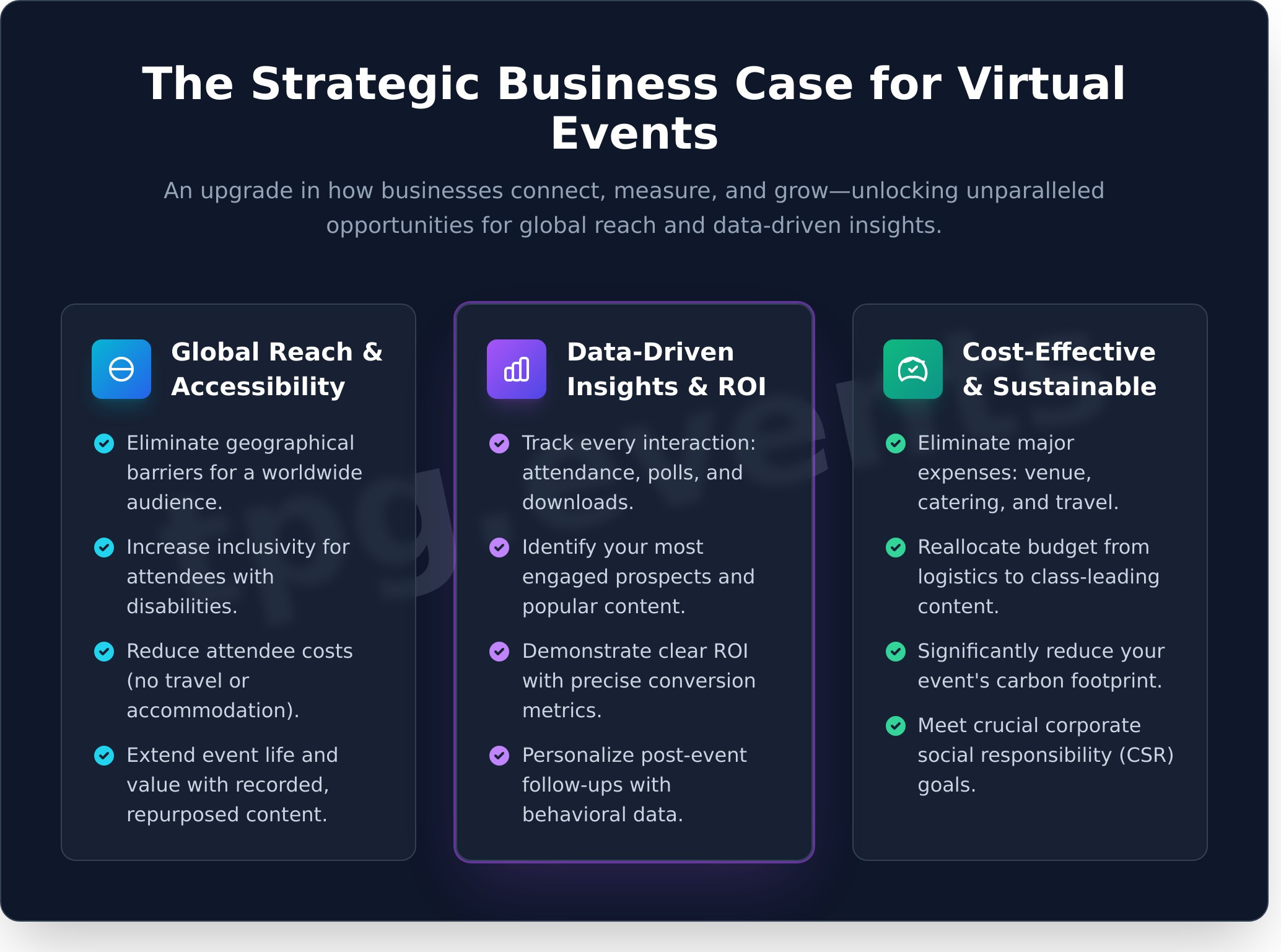
By 2026, the most successful organisations will view virtual events not as a substitute for in-person gatherings, but as a powerful and distinct strategic tool. The shift from physical to digital isn’t merely a change of venue; it’s a fundamental upgrade in how businesses connect, measure, and grow. Moving beyond the limitations of a physical space unlocks unparalleled opportunities for global reach, data-driven insights, and a demonstrable return on investment that aligns perfectly with modern corporate objectives.
Expanding Reach and Accessibility
The most immediate advantage of a digital format is the elimination of geographical barriers. Your message can reach a global audience without attendees incurring travel and accommodation costs, dramatically increasing potential attendance. Furthermore, digital platforms inherently lower barriers for attendees with disabilities or other limitations. Adhering to accessible virtual event best practices ensures you create a truly inclusive experience. By recording and repurposing content, the life of your event extends far beyond the live date, generating value for months to come.
Data, Analytics, and Measurable ROI
Where in-person events often rely on estimates, virtual platforms provide granular, actionable data. Every click and interaction is a measurable data point, offering deep insights into audience engagement and content performance. TPG provides solutions that allow you to:
- Track every interaction, from session attendance and duration to poll responses and resource downloads.
- Identify your most engaged prospects and pinpoint which topics resonated most strongly.
- Demonstrate clear ROI with precise lead generation and conversion metrics tied directly to event activity.
- Leverage behavioural data to deliver highly personalised post-event marketing and sales follow-ups.
Cost-Effectiveness and Sustainability
Hosting a virtual event eliminates many of the most significant line items in a traditional event budget, including venue hire, catering, staffing, and travel expenses. This financial efficiency directly contributes to a healthier bottom line. Beyond the balance sheet, it significantly reduces your event’s carbon footprint, helping you meet crucial corporate responsibility goals. This saved budget can then be strategically reallocated from logistics to what truly creates an unforgettable experience: class-leading content, immersive production quality, and securing top-tier speakers.
Types of Virtual Events: Choosing the Right Format for Your Goals
The digital landscape offers a vast array of formats, but the success of your event hinges on a single principle: strategy dictates structure. Choosing the right format is not merely a logistical decision; it is the foundation for achieving your primary objective. Whether you aim to foster internal collaboration, generate high-quality leads, or launch a product with global impact, the architecture of your event directly shapes the audience experience. A class-leading approach involves mapping your desired level of interaction and strategic goals-from top-of-funnel brand awareness to bottom-of-funnel sales conversions-to a bespoke virtual solution.
Internal Corporate Events
Designed to unite, inform, and motivate your most valuable asset-your people-internal events are the backbone of a strong corporate culture in a distributed world. These formats prioritise clarity, engagement, and a shared sense of purpose, ensuring every team member feels connected to the company’s mission. TPG provides the seamless technical production required to make these internal moments feel as significant and polished as any flagship external conference, reinforcing company values and driving performance.
- All-hands meetings and town halls: For transparent leadership communication, Q&A sessions, and company-wide updates that build trust.
- Virtual sales kick-offs and training: Immersive, interactive sessions designed to equip teams with the skills, knowledge, and motivation for a successful year.
- Team-building and award ceremonies: To celebrate achievements, recognise excellence, and strengthen professional bonds in a memorable, engaging online environment.
External Marketing & Sales Events
When your audience is external, your goal is to create an unforgettable brand experience that drives tangible business growth. These high-stakes virtual events are powerful engines for filling your sales pipeline, captivating new audiences, and cementing your market authority. Planning must be meticulous, incorporating everything from multi-track agendas to ensuring you follow the latest GOV.UK guidance on the best practices for accessible virtual events, guaranteeing your message reaches everyone.
- Virtual conferences and summits: Ambitious, multi-day events with keynote speakers, breakout sessions, and multiple content tracks that establish industry thought leadership.
- Digital trade shows: Featuring interactive virtual booths, integrated lead capture, and dedicated networking lounges to replicate the value of a physical trade floor.
- Product launches and keynotes: High-impact, polished broadcasts designed to generate maximum excitement, media coverage, and immediate market traction.
- Lead generation webinars: Expert-led panel discussions and deep-dive presentations that attract, educate, and qualify prospective customers.
The Technology Stack of a Flawless Virtual Event
Behind every unforgettable digital experience lies a robust and seamlessly integrated technology stack. As we look towards 2026, the distinction between amateur broadcasts and professional virtual events is defined by the quality of the underlying technology. A successful event relies not just on individual tools, but on a cohesive ecosystem where every component works in harmony. For complex events, entrusting this to a technical production partner is the difference between a functional stream and a truly immersive brand moment.
Choosing Your Virtual Event Platform
Your platform is the digital ‘venue’-the environment where your audience will engage, learn, and connect. The primary choice lies between all-in-one platforms that offer a unified solution, or integrating best-of-breed tools for a more customised experience. Whichever path you choose, ensure your solution provides class-leading features:
- Core Functionality: Seamless registration, interactive networking lounges, dynamic sponsor booths, and in-depth analytics are non-negotiable.
- Scalability: The platform must reliably support your expected audience size without compromising performance.
- Custom Branding: The ability to fully brand the environment ensures your event feels unique and aligned with your corporate identity.
The principles behind a custom-branded digital venue are closely related to those of excellent web development. A strong digital presence is foundational, and for many businesses, this starts with a professionally built website from an expert agency like NE1 Web Design.
Class-Leading AV Production for Virtual Delivery
To create a premium, broadcast-quality feel, professional AV equipment is essential. Moving beyond a simple webcam and laptop microphone elevates the entire experience. TPG provides solutions that include multiple high-definition cameras for dynamic shots, professional microphones and audio mixing for crisp, clear sound, and creative lighting design to set the mood. For a truly innovative backdrop, we utilise green screens and cutting-edge LED walls to build branded virtual sets that captivate your audience.
Streaming and Encoding: The Technical Backbone
The most creative content is worthless if the stream is unstable. This is where the technical backbone of streaming and encoding becomes critical. High-quality encoders convert your video into a format suitable for reliable streaming, while sufficient bandwidth and redundant connections provide a crucial safety net. For a global audience, a Content Delivery Network (CDN) ensures a stable, low-latency broadcast for every attendee, no matter their location. Deliver your event confidently with our technical expertise.
Future-Proofing Your Strategy: Virtual Event Trends for 2026
The landscape of virtual events is in a state of constant, dynamic evolution. To maintain a competitive edge and deliver truly unforgettable experiences, looking ahead to 2026 is not just advantageous-it’s essential. The future is being shaped by two powerful forces: the integration of sophisticated technology to create deeper immersion and the strategic shift from isolated events to continuous, year-round community engagement.
The Rise of AI and Hyper-Personalisation
Artificial Intelligence is set to become the cornerstone of bespoke attendee experiences. By 2026, expect AI to move beyond a novelty to a class-leading standard. This technology provides intelligent solutions for:
- Smarter Networking: AI-powered matchmaking will connect attendees with unparalleled precision, suggesting relevant contacts based on shared interests, goals, and professional profiles.
- Personalised Agendas: Content tracks will dynamically adapt to individual attendee behaviour and declared interests, ensuring every moment is relevant and valuable.
- Instant Support: Sophisticated AI chatbots will offer 24/7 assistance, resolving queries instantly and freeing up event staff to focus on higher-value interactions.
Immersive Technologies: AR and VR
The boundary between the physical and digital worlds will continue to blur, driven by advances in Augmented and Virtual Reality. These technologies will elevate engagement from passive viewing to active participation. Imagine hosting your next conference in a fully immersive VR environment or allowing attendees to interact with a 3D product model in their own space using AR. Creating ‘digital twins’ of real-world venues will offer hybrid attendees a seamless and equitable experience, no matter where they are.
The ‘Always-On’ Community Model
The most significant strategic shift will be from hosting a one-off event to cultivating a permanent digital community. Forward-thinking organisations are transforming their platforms into year-round hubs for connection, learning, and collaboration. This model involves hosting smaller, more frequent digital meetups or content drops between major conferences, turning a singular moment into a continuous, value-driven conversation and maximising the long-term ROI of your event strategy.
Staying ahead of these trends requires more than just technology; it demands a creative and technical partner dedicated to bringing your vision to life. As the architecture of engagement evolves, we provide the expertise to ensure your virtual events are not just current, but truly innovative. Let’s create the future of your events, together.
Elevate Your Strategy: The Future of Virtual Events
The digital landscape has transformed, and as we’ve explored, the power of a well-executed virtual event is undeniable. Success now hinges on a robust strategy tailored to your goals, a flawless technology stack that delivers an immersive experience, and a forward-thinking approach to future trends. Mastering these elements is the key to unlocking significant business value and audience engagement for years to come.
Bringing this vision to life requires a partner with proven expertise. TPG provides class-leading solutions for virtual events, trusted by the UK’s leading brands. With decades of experience in technical event production, our team offers full-service creative and technical delivery, transforming your concept into an unforgettable reality. We don’t just supply equipment; we become an extension of your team, dedicated to flawless execution from start to finish.
Ready to deliver a first-class experience? Discuss your next virtual event with a TPG expert today.
Let’s create an experience that captivates your audience and achieves your objectives.
Frequently Asked Questions About Virtual Events
How do you keep audiences engaged and avoid ‘Zoom fatigue’ during a virtual event?
TPG Events creates unforgettable virtual experiences by moving beyond standard webcasts. We combat fatigue with dynamic, broadcast-quality production and class-leading interactive solutions. This includes moderated Q&A sessions, live polls, gamification, and professionally managed breakout rooms. By designing a varied and fast-paced agenda, we ensure your audience remains focused, connected, and actively participating from start to finish. Our creative approach transforms passive viewing into an immersive event.
What is the difference in cost between a virtual event and an in-person event?
While virtual events eliminate significant expenses like venue hire, catering, and travel, a professional production still requires investment. Class-leading virtual solutions involve costs for the event platform, broadcast-quality AV production, and a dedicated technical crew. A simple webinar may cost a few thousand pounds, whereas a multi-day immersive conference can range from £15,000 to over £50,000, offering a powerful ROI through expanded reach and detailed analytics.
How do you measure the success and ROI of a virtual event?
Measuring the ROI of a virtual event is a data-rich process. TPG provides robust analytics to track key performance indicators (KPIs) such as registration vs. attendance rates, audience engagement metrics, session dwell times, and content downloads. For commercial events, we track lead generation, sponsor interactions, and post-event conversions. This granular data provides a clear, measurable picture of success and demonstrates tangible value to all stakeholders.
What kind of technical support is needed to run a professional virtual event?
A seamless virtual event requires a dedicated technical production team. TPG provides an end-to-end solution, acting as an extension of your team. This includes a project manager, stream engineers, vision mixers, and live support technicians to manage the platform, assist speakers with their connections, and troubleshoot any audience issues in real-time. This professional oversight ensures a flawless, broadcast-quality delivery and a stress-free experience for you and your presenters.
Can you create effective networking opportunities in a virtual environment?
Absolutely. TPG creates dynamic networking opportunities that go far beyond a simple chat box. We leverage innovative platform features like AI-powered matchmaking to connect attendees with shared interests, curated breakout lounges for topic-led discussions, and integrated one-to-one video meeting schedulers. By designing and facilitating these structured interactions, we ensure your attendees can build meaningful professional connections in a targeted and highly effective virtual environment.
How long does it take to plan and produce a large-scale virtual conference?
For a large-scale virtual conference, we recommend a planning runway of 12-16 weeks. This allows for thorough strategic planning, speaker sourcing and content creation, platform customisation, and a comprehensive marketing campaign. The final 3-4 weeks are dedicated to intensive technical rehearsals and final production checks. This structured timeline is essential for producing the class-leading virtual events that deliver on complex objectives and provide an unforgettable attendee experience.